Unity is the biggest free software for developers that allows you to import blender models as assets; However similarly to blender it is a complicated app to get started on. Blender’s built-in Mobile AR template allows for a (relatively) straightforward way to connect an android device and bring your models to life, which would be very beneficial to me since learning how to replicate it consistently means that I can add a new layer of effort to my exhibition which would be irreplicable when networking and making me stand out in this highly saturated and competitive field.
The first mistake that I’ve made was so early on that it preceded me opening Unity to begin with, the exporting option was set to “selected only”, but I neglected to actually select the 3D model in blender before exporting it, which means that the exported file was empty. To fix this I retraced my steps and identified the issue, then exported the file again.
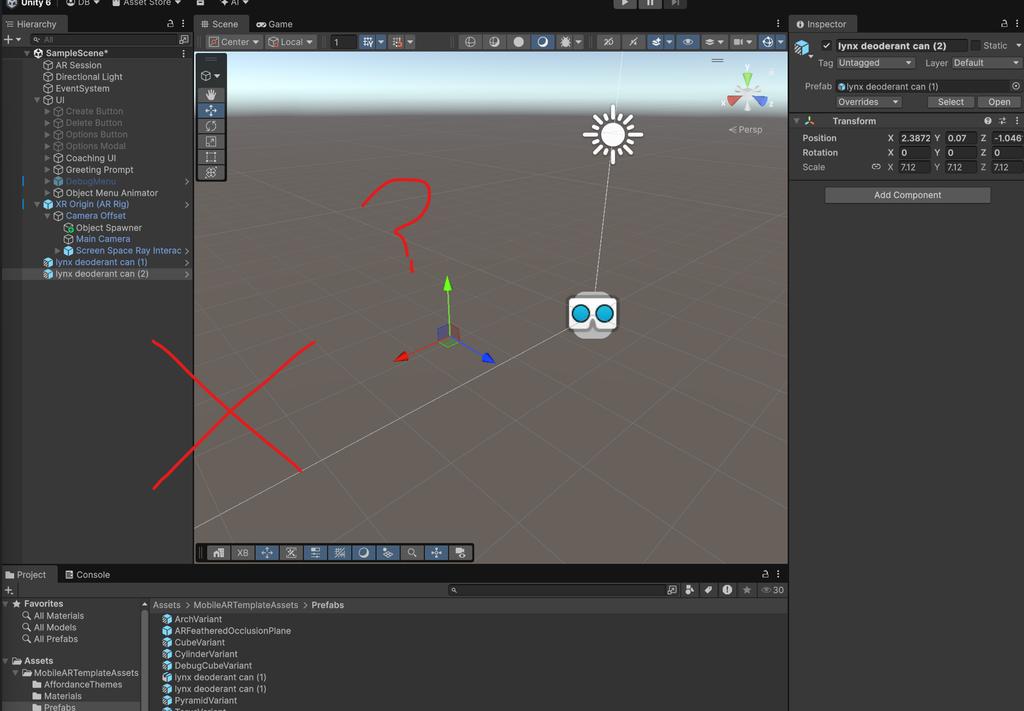
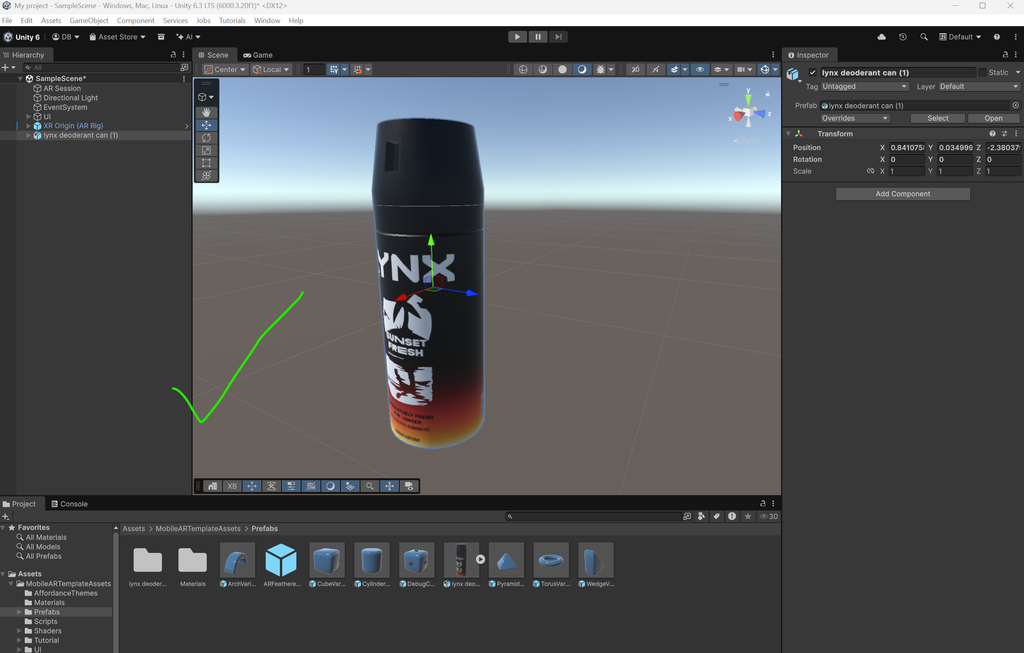
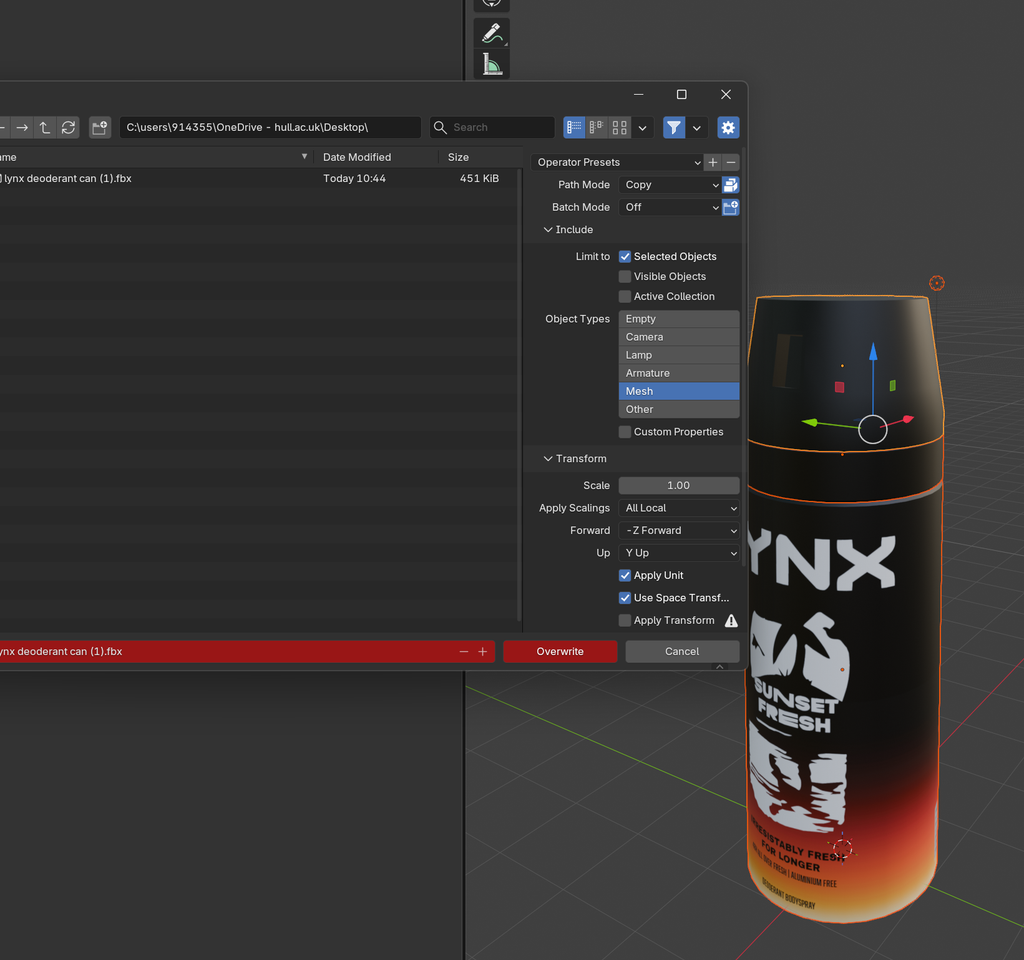
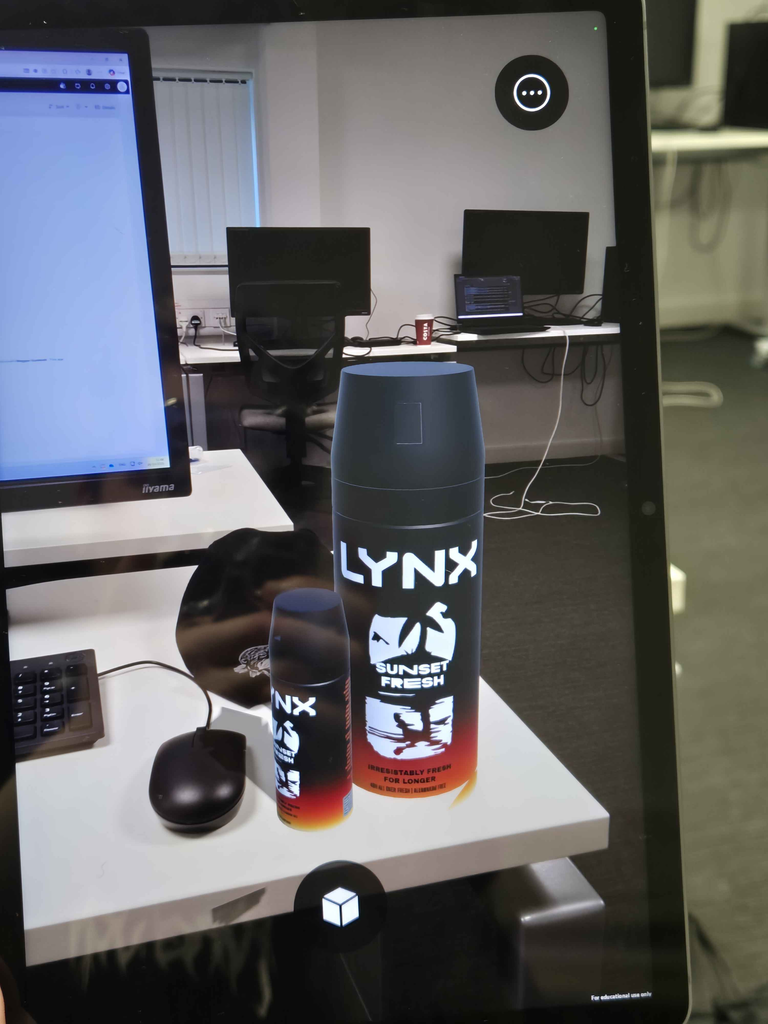
Originally my AR result ended up being very stiff and overall incorrect, my model was huge and was impossible to move and interact with, the only thing I could do was spawn more of them. I was informed that this was a result of a missing step in Unity which allows interaction with the object, I would not have been able to come to this conclusion myself without help or searching up incredibly specific questions. This is what made me doubt using AR at first, since I am currently not able to create interactable models independently. Despite this, I now know exactly what the problem originally was, meaning I am now able to research on most effective methods of tackling the issue.
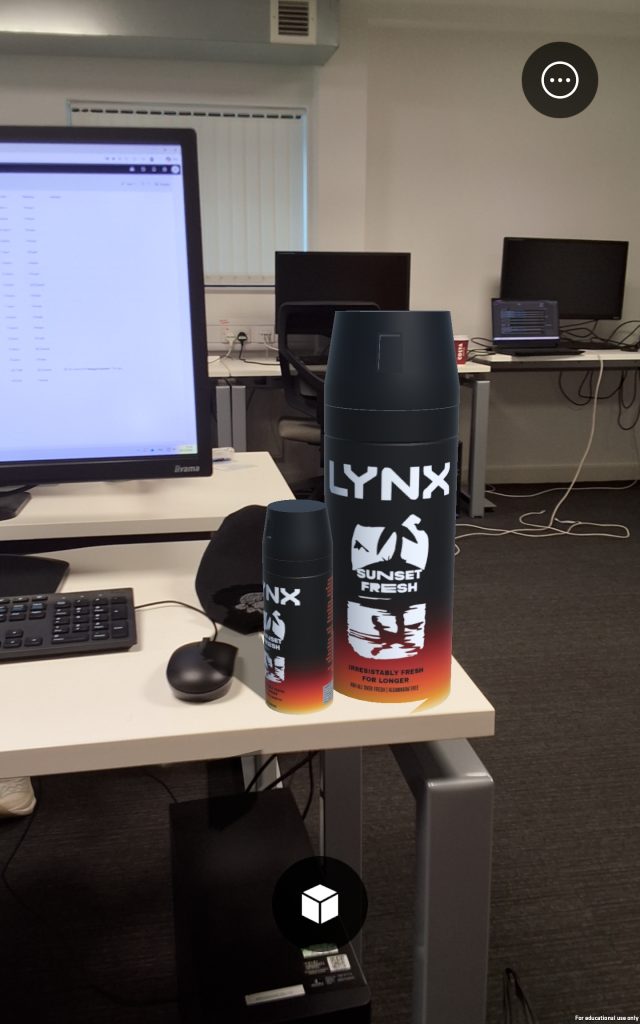
To fix the scaling issue, I imported another shape for scale and then went back to the Unity editor. I scaled down the model itself to a reasonable size and most importantly added interactivity and collision to it. The next time I launched the AR prototype, it looked much more authentic and was now able to be scaled and rotated for a better preview.
Broken version
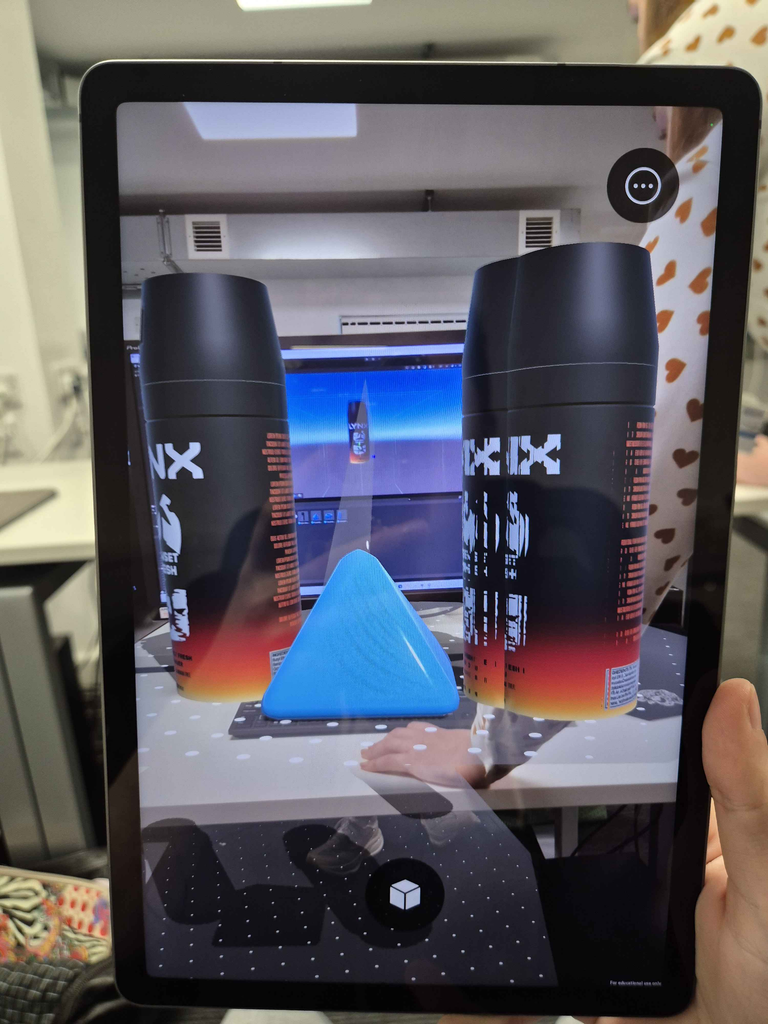
Fixed version
Verdict
In my opinion AR is by far the most interesting and versatile of all emerging technologies that we have covered, and is the form that I would consider using the most in my final outcome. There are however a few stipulations, the main one being that since it involves 2 types of software that exceed my current levels of tech-literacy my skills will not be sufficiently polished by the time that I get the opportunity to use this medium. On the other hand, tackling this challenge would look amazing in my graphic design journey and would demonstrate my resilience and my ability to keep up with current technology.
I could utilise this appropriately when preparing my final exhibition, perhaps by creating an advertisement that would have something to do with the product emerging that would not make sense without giving the user the ability to use a device with the AR model. This would create a conceptual design that will break the 4th wall and make people stay analysing it for longer.