After some research, the most common pattern within success that I found is appropriate collaboration. The best brand campaigns are born when the creative and marketing teams work closely together and involve themselves throughout the entire (or at least the majority) of the project. A frequent reason campaigns tend to fail to gather traction is when the designers are brought onto the project at the wrong time, having no room to share their insight and experience that the marketers do not posses, having too little say in the project which leads to visually unappealing results. Knowledge exchange, task delegation and acknowledging your partners’ strengths and experience is the key to a successful outcome.
Case study – Spotify wrapped 2025
Spotify wrapped has perfectly captured everything that the audience craves within 1 simple feature. The marketing team knew that this feature had to be highly contagious, urging the users to share their results with other people and encouraging them to share there’s back. Because of that they used light hearted and fun statistics all about the user, showing them how their music taste evolved throughout the year, and even putting them into “clubs” based on their music taste to help them connect with other users.
From my research, I could clearly infer that the Spotify team acknowledged that despite this being a good marketing scheme, simply showing blank statistics to their listeners is not going to make it nearly as fun to share the results. the design team made sure that each slide was engaging and spoke to the users to make the interaction between the user and the brand as personal as their musical growth throughout the year. The team took advantage of the optimal distinctiveness theory, which suggests that people always balance the need to belong with their need to express individuality. This resulted in some statistics being purposely personal such as being in a certain percentage of an artist’s monthly listeners, and some are meant to unite users, such as the clubs and the numerous calls to action encouraging to share your results.
“Every gradient and texture reflects that unpredictable mix of emotion and rhythm that makes listening so personal. It’s our most expressive Wrapped yet, and I love that it feels stripped down with the reduced colour palette and bold use of images to feel simple and super modern.”
Jeremy Wirth, Spotify’s Global Executive Creative Director, regarding the 2025 Spotify wrapped.
Lauren.Peterson@groupsjr.com (2025). How Our 2025 Wrapped Campaign Turns Your Year in Listening Into a Global Celebration — Spotify. [online] Spotify. Available at: https://newsroom.spotify.com/2025-12-03/wrapped-marketing-campaign/.
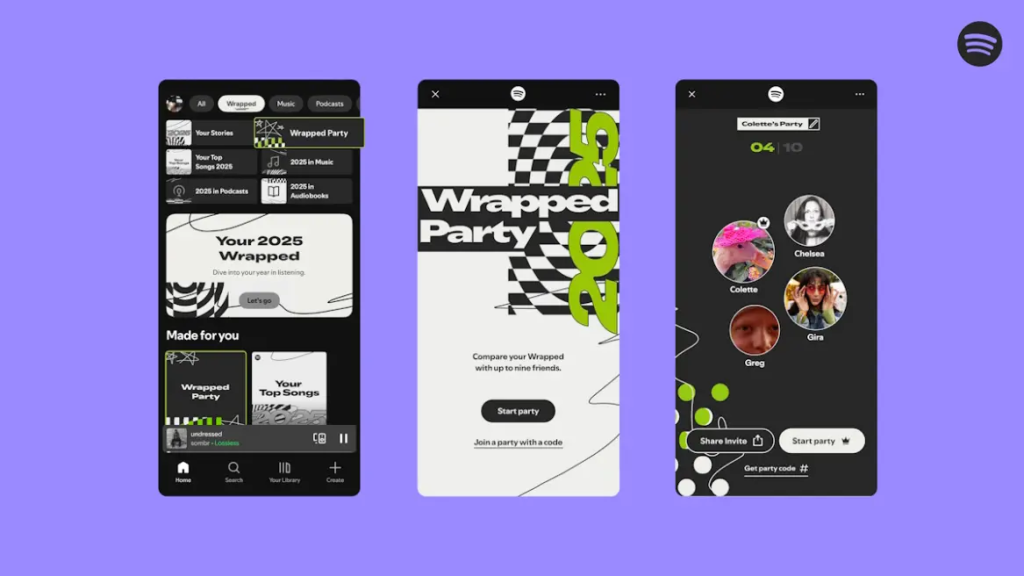
Spotify wrapped was described as the biggest marketing project of the year that had multiple widely respected individuals leading the project in-house (employed directly by the company) such as Jeremy Wirth, Global Executive Creative Director, and Rasmus Wangelin, Head of Brand Design at spotify. Spotify is the worlds leading music app, they had a very generous budget and “tens of teams” working relentlessly to provide the users with the most satisfactory experience. Delegating appropriate tasks and resources to specific teams and having them all be intertwined within the project throughout its duration has proven to yield good results, as spotify wrapped 2025 has been the most successful wrapped campaign Spotify has done so far, with 200+ million users worldwide sharing their personalised statistics.
Case study – Florence by Mills
A small design agency consisting of 6 members (one of which has 4 paws and a tail) were tasked with creating a series of social posts aiming to promote 4 new flavours of Florence that is to be advertised on social media and be featured on in-store display screens. The team was tasked with creating individually personalised advertisements for each flavour, focusing on each one as an individual product rather than lazily grouping them together into 1 big ad. This was proven to be a success, some variations used shiny, smooth 3d visuals to make each flavour look incredibly appetizing to the target audience, with a variety for them to choose from.
From this campaign I can see that the designers knew their target audience, which ranges from young to middle aged women who care about their mental and physical wellbeing. They used this knowledge appropriately and made the adverts overwhelmingly pastel, suggesting health, calmness, and happiness, perfectly encapsulating the revitalising effects that the coffee is advertising. The marketers knew how to use these assets to their full potential, placing them right inside of stores in order to lure the consumers in with delicious visuals, and convince them to make an impulsive purchase of the product since it is placed nearby.
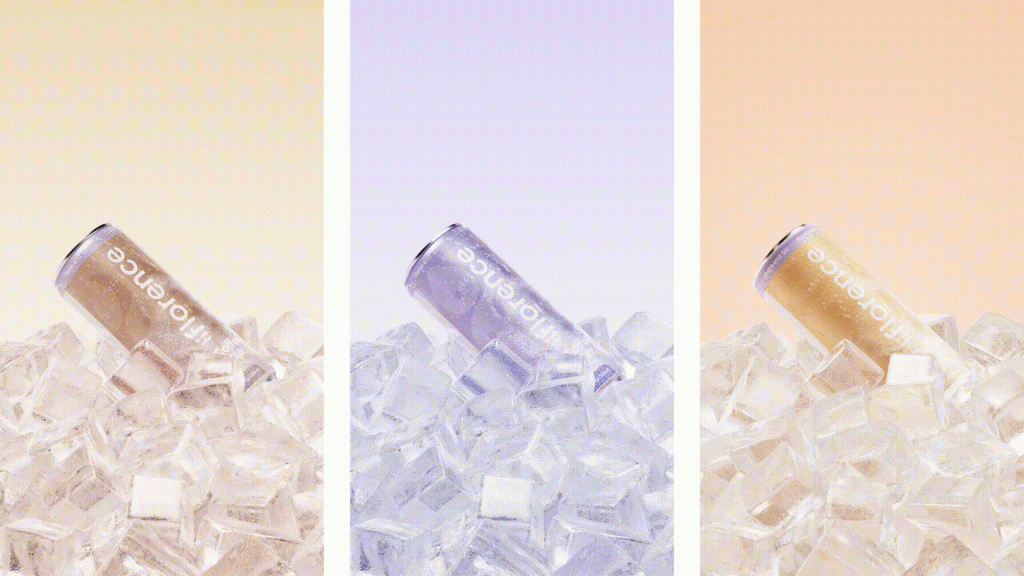
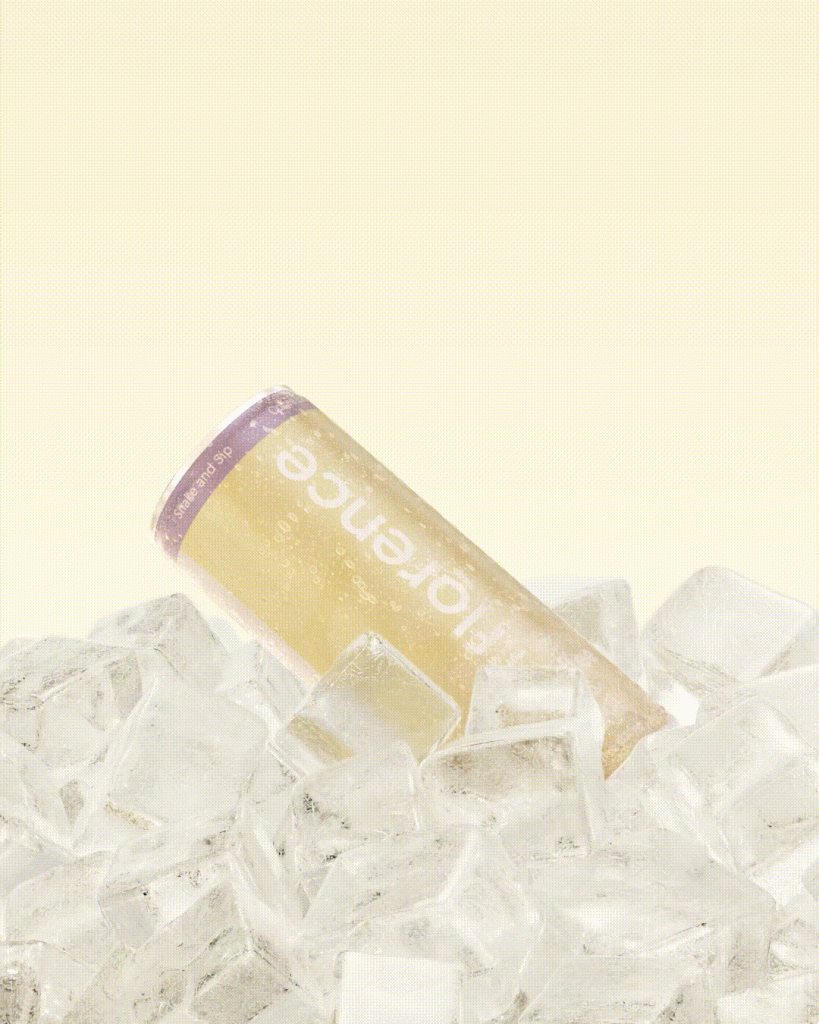

Having a small team size means each member is delegated more personalised tasks based on their expertise, and would have a much smaller budget than big in-house design teams. This directly correlates to my current collaborative project, in which I too have a small team with limited resources. They however proved that the size of the design team is irrelevant if the marketing team can utilise the assets appropriately. This sort of symbiosis between the 2 teams exchanging knowledge and expertise is why the campaign is as effective as it is, since the designers were aware of the placement of the assets they are providing from the beginning, they can use their knowledge of consumer behaviour to refine the finished product.
References:
- “Florence by Mills Coffee – Social Launch Campaign | OK Social.” Oksocial.co.uk, 2026, www.oksocial.co.uk/projects/florence-0-ba267. Accessed 27 Mar. 2026.
- Chandonnet, Henry. “How Does Spotify Wrapped Get Made? Inside the Yearlong Process.” Business Insider, 3 Dec. 2025, www.businessinsider.com/inside-spotify-wrapped-team-creation-process-2025-12.
- Spotify Selects. “Designing 2025 Wrapped: Turning a Year of Listening into Art.” Substack.com, Spotify Selects, 4 Dec. 2025, spotifynews.substack.com/p/designing-2025-wrapped-turning-a.